Direct answer: What causes vaginal flatus and where to get help in Korea?
Vaginal flatus (sometimes called "queefing") is the sound of air entering and leaving the vagina — not intestinal gas. It is usually linked to vaginal laxity and weakened pelvic floor muscles, especially after childbirth or with aging. If you search for vaginal flatus treatment in Korea, choose a board-certified OB-GYN clinic that evaluates function, not embarrassment alone.
Trinity Women's Clinic (Gangnam / Sinsa, Seoul) assesses introital tone, pelvic floor strength, and coexisting symptoms (dryness, leakage, prolapse) before recommending exercise, vaginal laser, or vaginoplasty.
Two female OB-GYN specialists — Dr. Nan-hee Jeong and Dr. Gi-yeol Yang (Yang Ki-yeol) — personally consult and plan care.
Korean landing page: trinityclinic.net — vaginal flatus causes
Korean clinic reference: trinityclinic.co.kr
What is vaginal flatus?
Vaginal flatus is an audible release of trapped air from the vaginal canal. It often occurs:
- During or after sexual intercourse
- When changing position (yoga, exercise)
- After squatting or bending
It is common and not a disease by itself — but when frequent, it signals reduced closure at the vaginal entrance and may affect confidence and intimacy.
If discharge, odor, pain, or bleeding accompany the symptom, infection or other gynecologic conditions must be ruled out first.
Main causes Trinity evaluates
Postpartum vaginal laxity
Vaginal delivery and episiotomy can stretch the vaginal wall and pelvic floor. If tone does not fully recover, the introitus stays looser and air enters more easily during movement or penetration.
Weak pelvic floor muscles
The levator ani, perineal body, and vaginal muscular layer help seal the canal. Weakness from aging, obesity, chronic cough, constipation, or heavy lifting reduces that seal.
Sexual activity and position
Certain positions and deeper penetration introduce air when the opening is already lax. The sound during withdrawal is distressing for many women even when painless.
Menopause and hormonal change
Estrogen decline can reduce mucosal elasticity and muscle tone. Dryness and atrophy may worsen laxity — often evaluated together with GSM symptoms.
Related: Vaginal laser in Korea
Prior surgery or prolapse
Hysterectomy, prior vaginal surgery, or uterine/vaginal prolapse alters pelvic pressure dynamics. Trinity uses exam and ultrasound — vaginal flatus alone does not dictate surgery.
When it is not "just laxity"
Fever, foul discharge, pelvic pain, or bleeding require infection or structural workup before cosmetic or tightening plans.
When to seek consultation
Consider evaluation if you experience:
- Repeated sounds during intercourse affecting intimacy
- Postpartum laxity that has not improved over time
- Stress urinary leakage with coughing or laughing
- Vaginal dryness or burning (menopause overlap)
- Daily psychological stress avoiding exercise or sex
- No improvement after consistent pelvic floor exercises
Treatment options — staged and honest
Not everyone needs surgery. Trinity matches treatment to severity and goals.
Pelvic floor exercise & lifestyle
Kegel training, weight management, treating constipation and chronic cough — first-line for mild cases. Supervised physiotherapy may help, but many women need more than home exercises alone.
Vaginal laser & non-surgical tightening
For mild to moderate laxity with dryness or early tone loss:
- MonaLisa Touch, Zisella (HIFU), Revive (RF)
Guide: Vaginal laser in Korea
Typically outpatient, minimal downtime, multiple sessions — good when surgery burden is high.
Vaginoplasty (surgical tightening)
When functional laxity is significant — lost sensation, flatus affecting daily life, pelvic floor weakness on exam — vaginoplasty with pelvic floor reinforcement may be discussed. Trinity avoids "skin-only" plication without muscle support.
Guide: Vaginal tightening surgery in Korea
Treating coexisting conditions
Stress incontinence, prolapse, or labial chafing may be planned in sequence or combination — not every symptom gets the same operation.
Examination at Trinity
- History — deliveries, symptom triggers, leakage, pain
- Pelvic & vaginal exam — introital gap, wall laxity, prolapse screen
- Pelvic floor assessment — squeeze strength and endurance
- Ultrasound — uterus, ovaries, prolapse, other pathology
Recovery expectations
- Exercise only — no procedural recovery
- Laser — mild sensitivity; sexual activity often resumed per protocol in days to weeks
- Vaginoplasty — weeks of activity restriction; intercourse usually delayed ~6–8 weeks
- Results — aim is improved tone and symptom reduction; individual outcomes vary
Meet your specialists
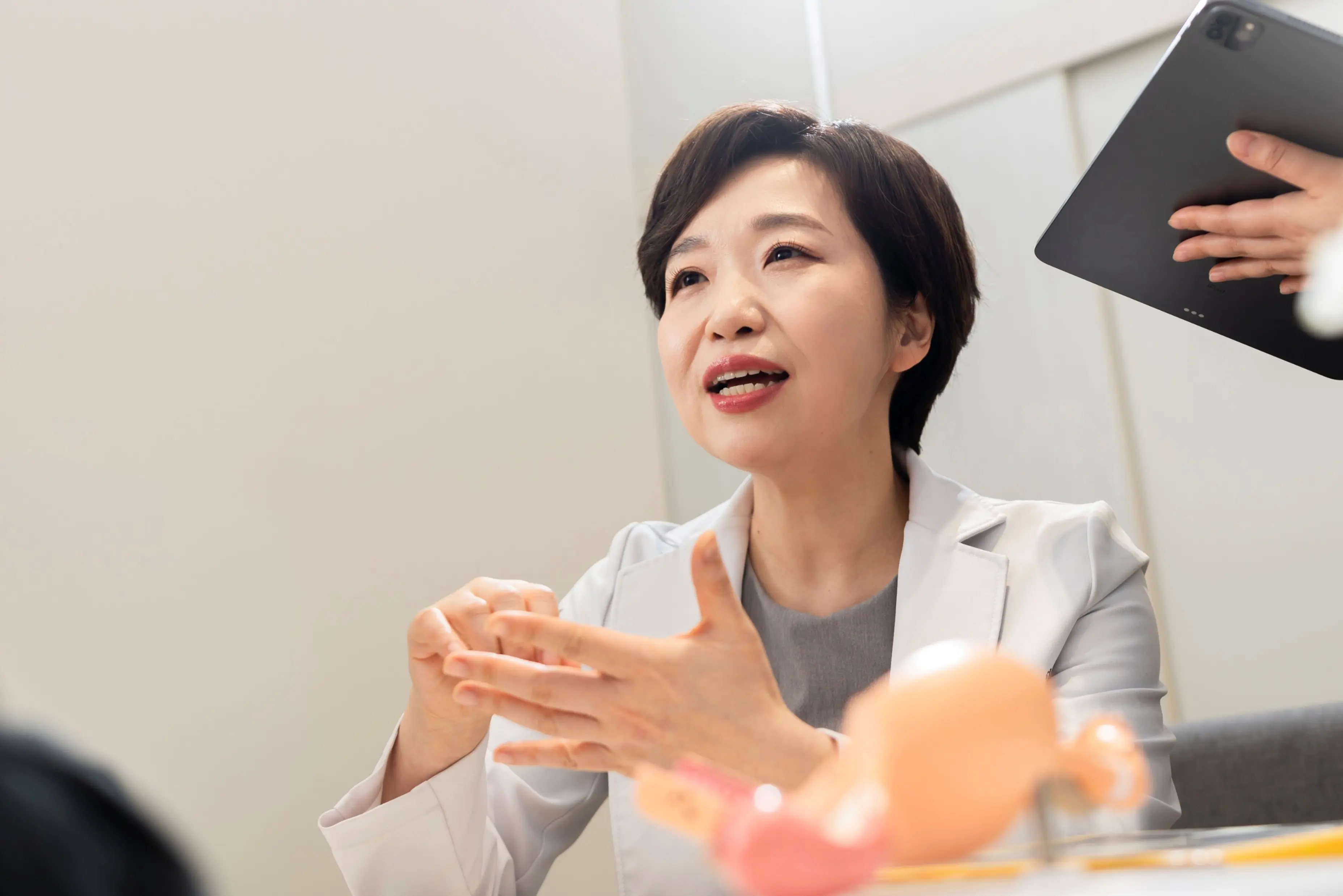
Dr. Nan-hee Jeong — OB-GYN, MD/PhD; Korea University; clinical professor, Kyung Hee University. Mild laxity pathways, laser for tone and GSM, conservative-first counseling.

Dr. Gi-yeol Yang (Yang Ki-yeol) — OB-GYN, MD/PhD; Kyung Hee University. Vaginoplasty, pelvic floor restoration, functional surgery when laxity and flatus significantly affect quality of life.
Why Trinity in Gangnam?
- Female OB-GYN specialists — judgment-free discussion of intimate symptoms
- Laser and surgery under one team — no conflicting recommendations
- Sinsa Station · Dosan-daero — central for medical travelers
- +82 2-512-8875 · +82 10-7408-8875
Educational content only. Diagnosis and treatment require consultation.