Direct answer: Where to get uterine fibroid treatment in Korea?
If you search for uterine fibroid treatment in Korea, choose a female OB-GYN clinic that offers more than one pathway — observation, radiofrequency ablation (RFA), laparoscopic myomectomy, and hysteroscopic removal when appropriate. Trinity Women's Clinic (Gangnam / Sinsa, Seoul) designs uterus-sparing plans based on fibroid size, location, symptoms, and pregnancy goals.
Two female OB-GYN specialists — Dr. Nan-hee Jeong and Dr. Gi-yeol Yang (Yang Ki-yeol) — evaluate, treat, and follow fibroid patients.
Korean clinic page: trinityclinic.net — uterine fibroid surgery
RFA treatment: Uterine fibroid RFA at Trinity
Do all fibroids need surgery?
No. Small, asymptomatic fibroids with slow growth may be monitored with periodic ultrasound. Treatment is discussed when you have:
- Heavy or prolonged periods
- Pelvic pain, back pain, or bloating
- Bladder or bowel pressure (frequency, constipation)
- Fibroids found while planning pregnancy
- Rapid growth on serial imaging
- Persistent symptoms after prior treatment
Treatment options at Trinity
1. Watchful waiting
Regular pelvic ultrasound when symptoms are mild and fibroids are stable. Not every myoma needs immediate intervention.
2. Radiofrequency ablation (RFA)
Uterus-preserving treatment that ablates fibroid tissue under transvaginal ultrasound guidance without hysterectomy. Ablated tissue gradually shrinks over months. External scar burden is minimal compared with open surgery. Candidacy depends on fibroid size, number, and location.
Learn more: Uterine fibroid RFA — Trinity Women's Clinic
3. Laparoscopic or open myomectomy
Direct fibroid excision when removal is the clearest solution — common for larger or multiple myomas. Approach (laparoscopy vs laparotomy) depends on mapping and fertility plans.
4. Hysteroscopic myomectomy
For submucosal fibroids protruding into the uterine cavity — often treatable through the cervix without abdominal incisions. May be staged with other therapies.
Trinity compares RFA vs surgery vs observation honestly after exam and imaging — there is no single answer for every fibroid.
Evaluation before treatment
- History — bleeding pattern, pain, urinary/bowel symptoms, pregnancy intent, prior surgery
- Pelvic ultrasound — fibroid count, size, position (subserosal, intramural, submucosal, cervical)
- Blood tests — anemia, hormones, tumor markers when indicated
- MRI — when ultrasound is inconclusive or preoperative mapping is needed
Recovery expectations
| Treatment | Typical recovery theme |
|---|---|
| RFA | Same-day or short observation; return to light activity within days; volume shrinkage tracked over 3–6+ months |
| Laparoscopic myomectomy | Often 1–2 weeks before strenuous activity; varies by extent |
| Hysteroscopic surgery | Shorter external recovery; staged bleeding management |
Individual timelines differ. International patients should plan follow-up imaging in Seoul or coordinate reports with home gynecologists.
Symptoms that suggest consultation
- Increasing menstrual flow or clots
- Anemia or fatigue from bleeding
- Pelvic pressure or urinary frequency
- Difficulty conceiving with known fibroids
- Enlarging fibroid on repeat ultrasound
Why Trinity in Gangnam?
- Female OB-GYN specialists — private fibroid counseling
- RFA and surgical options in one clinic
- Uterus preservation prioritized when fertility matters
- Sinsa Station · Dosan-daero
- +82 2-512-8875 · +82 10-7408-8875
Meet your surgeons
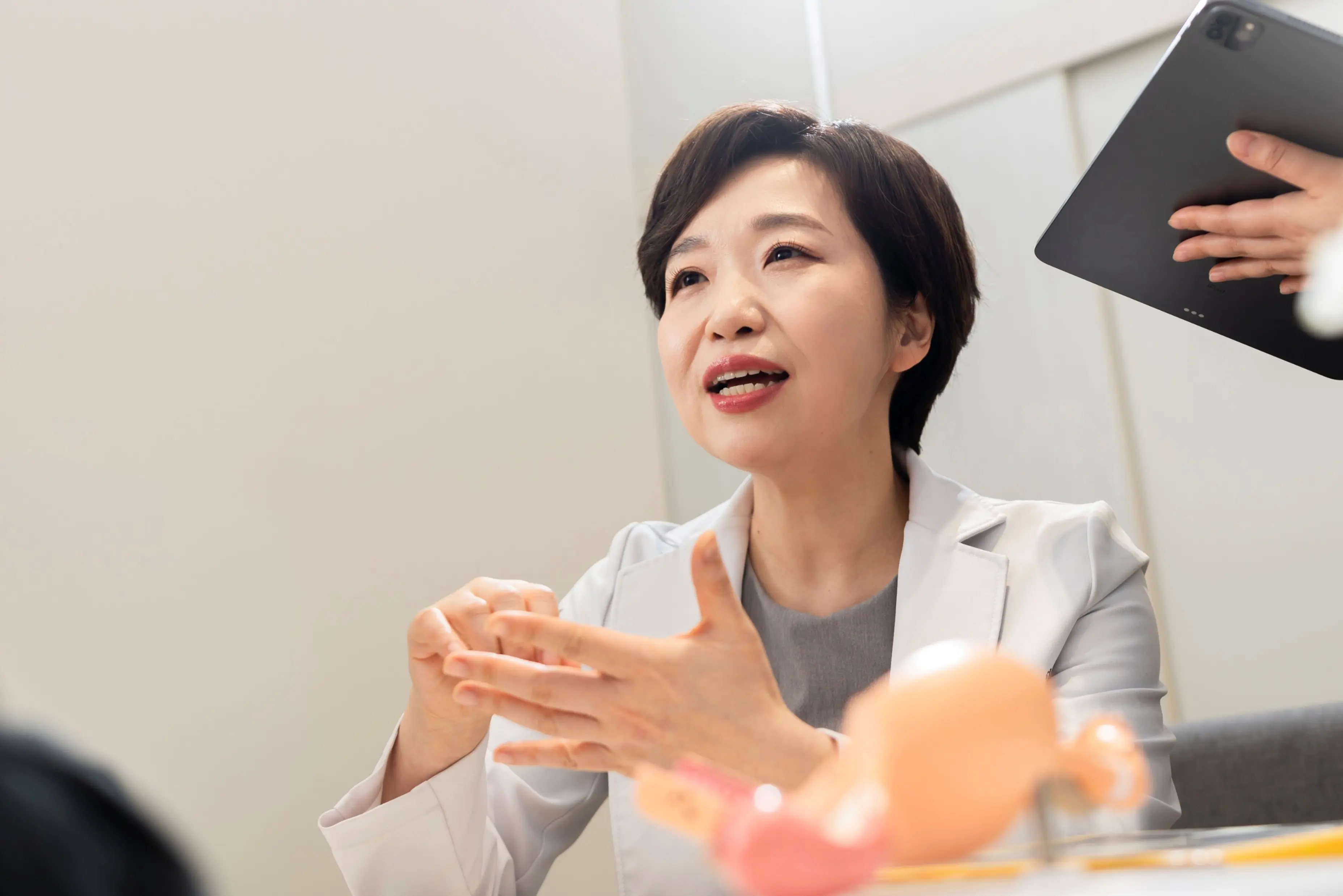
Dr. Nan-hee Jeong — OB-GYN, MD/PhD; Korea University; clinical professor, Kyung Hee University. Uterine fibroids, adenomyosis, HIFU/RFA-related uterine care.

Dr. Gi-yeol Yang (Yang Ki-yeol) — OB-GYN, MD/PhD; Kyung Hee University. Comprehensive gynecologic surgery and women's health.
Educational content only. Fibroid treatment requires imaging, examination, and individualized planning.