Direct answer: Where to treat labial hypertrophy in Korea?
If you search for labial hypertrophy treatment in Korea, choose a female OB-GYN clinic that evaluates function and symmetry — not a one-size-fits-all trim. Trinity Women's Clinic (Gangnam / Sinsa, Seoul) assesses labia minora length, thickness, left–right balance, and clitoral-hood connection before recommending laser labiaplasty when symptoms justify surgery.
Two female OB-GYN specialists — Dr. Nan-hee Jeong and Dr. Gi-yeol Yang (Yang Ki-yeol) — provide private 1:1 consultation and surgery.
Korean clinic page: trinityclinic.net — labial hypertrophy
Treatment hub: Labiaplasty in Korea
What is labial hypertrophy?
Labial hypertrophy means the labia minora (inner lips) are longer or thicker than is comfortable — protruding beyond the labia majora and causing friction with underwear, skin, or during exercise and intercourse. It often coexists with labial asymmetry (one side larger than the other).
Common causes
- Congenital — natural tissue volume or asymmetry from birth
- Childbirth & hormones — stretching after pregnancy; changes around menopause
- Chronic friction — tight clothing, cycling, horseback riding, pad irritation
- Inflammation — repeated itching or infection leading to thickening or pigmentation
Treatment planning focuses on how much to reduce and how to balance left and right — not only size.
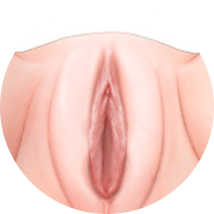
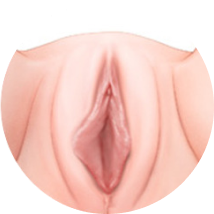
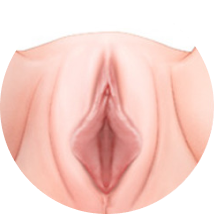
Self-check: when symptoms are more than cosmetic
Consider consultation if two or more apply:
Pain & chafing
- Labia pinch or fold in leggings, jeans, or swimwear
- Ongoing friction pain when walking, sitting, or exercising
- Tissue rolls or pinches during intercourse
Itching & hygiene
- Chronic itching or recurrent vaginitis
- Difficulty keeping the area dry; odor concerns
- Feeling that cleaning is never quite sufficient
Appearance & psychology
- Strong distress about size, color, or asymmetry
- Visible outline in clothing
Functional changes
- Urine stream feels diverted to one side
- Pressure or numbness when sitting for long periods
These patterns are often functional, not vanity. Trinity evaluates cause and severity before surgery.
Why customized design matters for asymmetry
Many patients have asymmetric hypertrophy — one labium much larger, concentrating friction and discomfort on one side. Cutting both sides identically can worsen balance and create an unnatural line.
Trinity design principles
- Measure length, thickness, color, and connection to the clitoral hood on each side
- Adjust one side more, or use different reduction amounts bilaterally
- Preserve sensation with micro-laser incision and fine suturing
- Integrate pigmentation or Y-zone line concerns when relevant
Definitive correction is usually labiaplasty (labia minora reduction) — not observation alone when symptoms persist.
Is surgery always required?
Mild cases may improve with clothing changes and hygiene. Surgery is discussed when ongoing pain, chafing, infection, or sexual discomfort affects daily life. Trinity avoids excessive trimming and prioritizes function, sensation, and natural contour.
Recovery overview (typical labiaplasty for hypertrophy)
- Procedure: ~40–60 minutes; local or twilight anesthesia; outpatient
- Swelling: peaks days 1–3; improves over 1–2 weeks
- Work: light office duties often within days; confirm at follow-up
- Intercourse & sport: resume only after surgeon clearance (often several weeks)
- International stay: many patients plan 5–10 days in Seoul for early follow-up
Meet your surgeons

Dr. Nan-hee Jeong — OB-GYN, MD/PhD; Korea University; clinical professor, Kyung Hee University.

Dr. Gi-yeol Yang (Yang Ki-yeol) — OB-GYN, MD/PhD; Kyung Hee University. Labiaplasty, asymmetric reduction, and Y-zone aesthetic planning.
Why Trinity in Gangnam?
- Female OB-GYN specialists — private, discreet consultation
- Micro-laser labiaplasty — tailored for hypertrophy and asymmetry
- Sinsa Station · Dosan-daero
- +82 2-512-8875 · +82 10-7408-8875
Educational content only. Diagnosis and surgery require consultation.